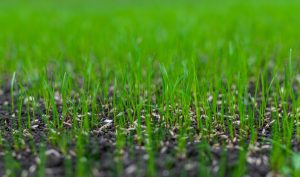
Your lawn has been aerated and seeded to help strengthen thin areas and encourage new grass growth. Now what?
Right after aeration and seeding, your lawn probably won’t look dramatically different. You may see small plugs of soil across the grass, visible seeds, and the same thin areas that were there before treatment. That’s expected.
What you do after aeration and seeding can help create the conditions new grass needs to germinate and establish. From keeping seed moist to knowing when to mow, a few simple steps can help you take care of your lawn while the treatment does its work.
1. Leave the Soil Plugs Alone
Those small pieces of soil scattered across your lawn after aeration are supposed to be there.
Core aeration removes plugs of soil to help relieve compaction and create openings for air and water to move into the root zone. There’s no need to rake them up or remove them after treatment. They’ll gradually break down and return to the lawn.
2. Keep Newly Seeded Areas Moist
Watering is one of the most important things you can do after seeding.
New grass seed needs adequate moisture to germinate and establish. The goal is to keep the newly seeded area consistently moist without saturating the soil or creating puddles and runoff.
How often you need to water depends on the conditions. Hot, dry or windy weather can cause the surface to dry more quickly, while rainfall may reduce the amount of additional watering your lawn needs.
As the new grass becomes established and develops stronger roots, watering can gradually become less frequent.
3. Give New Grass Room to Grow
Your yard doesn’t have to become completely off-limits, but reducing unnecessary traffic can help protect new grass while it’s establishing.
Young seedlings are more vulnerable than established turf. Repeated traffic from people and pets can disturb newly seeded areas and put additional stress on young grass.
When possible, avoid repeatedly walking across the same newly seeded areas and give them some time to establish.
4. Don’t Rush the First Mow
New grass needs time to grow before returning to your normal mowing routine.
Rather than choosing your first mowing day based only on how much time has passed, pay attention to the height of the new grass.
The University of Maryland Extension recommends mowing new turf once it reaches about one-third higher than your recommended mowing height. If your target mowing height is 3 inches, for example, you’d mow when the new grass reaches about 4 inches.
When it’s time to mow, use a sharp blade and avoid removing more than one-third of the grass blade at once.
The lawn should also be dry and firm enough to mow without disturbing new seedlings or creating ruts.
5. Keep an Eye on Falling Leaves
Aeration and seeding season overlaps with another familiar part of fall, the falling leaves.
A few leaves scattered across the lawn aren’t a reason to worry. But you don’t want a heavy layer sitting over new grass for an extended period.
Too much leaf coverage can block the light young grass needs. Remove heavy buildup as needed, but be careful around newly seeded areas so you don’t unnecessarily disturb young seedlings.
While you’re keeping leaves off your lawn, don’t forget about the leaves collecting overhead. Fall leaf drop can quickly add debris to your gutters, making this an important time to keep up with gutter cleaning, too.
6. Consider Whether Your Lawn Needs Lime
Aeration helps address compaction and seeding introduces new grass, but soil pH is another important part of the growing environment.
When soil is too acidic, lime helps raise the pH toward a range that better supports healthy turf growth and nutrient availability. Fall is also an ideal time for lime application, and aeration creates openings that allow lime to enter the soil rather than remaining entirely at the surface.
A soil test can help determine your lawn’s pH and whether lime is needed. When soil is too acidic, applying the appropriate amount of lime helps address what’s happening below the grass and supports the soil environment your lawn depends on.
7. Give New Grass Time
You may start seeing new grass in one area before another. Germination and establishment can vary based on grass variety, temperature, moisture, sunlight and soil conditions.
A sunny section may dry more quickly than a shaded one, while a slope may behave differently from a lower part of the yard. Some areas may simply take longer to show visible growth.
Don’t judge the success of aeration and seeding based on what the lawn looks like after only a few days.
What Not to Do After Aeration & Overseeding
Most aftercare is less about doing more to the lawn and more about giving new grass the right conditions to establish.
A few things to avoid:
- Don’t rake up the soil plugs left by aeration.
- Don’t allow newly seeded areas to repeatedly dry out.
- Don’t overwater to the point of puddling or runoff.
- Don’t put unnecessary traffic on young grass.
- Don’t mow before the new grass is ready.
Give Your Lawn Time to Do Its Part
Aeration & Overseeding starts a process that continues well after the treatment is complete.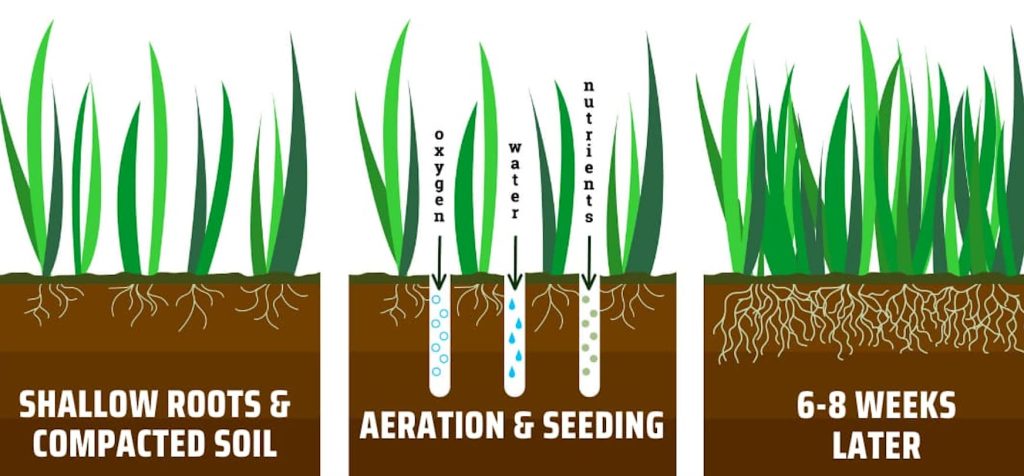
Aeration helps relieve compaction and improve the growing environment. Overseeding introduces new grass where the lawn needs more density. From there, your job is mostly about protecting those conditions while new grass establishes.
Keep newly seeded areas appropriately moist, minimize unnecessary traffic, wait until the grass is ready before mowing and give the lawn time to develop.
Ned’s Lawn Treatment offers Aeration & Overseeding as part of a more complete approach to maintaining a healthier, fuller lawn.