Your lawn can look very different in September than it did in May.
Months of heat, dry weather, mowing, foot traffic and everyday use can leave grass thin, worn or patchy. The soil beneath it may also become compacted, making it harder for established grass to get the air, water and nutrients it needs.
For cool-season lawns in New Jersey, Pennsylvania, Delaware, and Maryland, late summer and early fall offer an important opportunity to recover.
Aeration and seeding address two different parts of that recovery.
- Improve growing conditions in the soil
- Introduce new grass where the lawn has thinned
Here’s why what you do after summer can make a difference well beyond fall.
Summer Takes a Toll on Your Lawn
Spring usually gives grass favorable growing conditions. Temperatures are moderate, moisture is more readily available, and cool-season grasses are actively growing.
When summer arrives, heat and dry periods can stress grass, while regular use of the yard adds another challenge. Kids, pets, lawn equipment, outdoor furniture, and repeated foot traffic can all put pressure on the turf and soil.
By late summer, you may notice:
- Thin or patchy areas
- Bare spots in heavily used parts of the yard
- Grass that doesn’t seem to bounce back after dry weather
- Hard, compacted soil
- Water running off instead of soaking into the ground
These can be signs that the grass needs better growing conditions and new growth to help restore density.
Why Fall is a Good Time for Lawn Recovery
Timing is important when you’re trying to establish new grass.
Cool-season grasses grow best when temperatures aren’t at summer extremes. By late summer and early fall, the soil is still warm while air temperatures begin to cool. Those conditions can support seed germination and early root development. The lawn also still has time to establish before winter arrives.
That makes fall lawn care less about fixing the way your yard looks today and more about helping it recover from the season it just went through.
Aeration Helps the Soil Recover
Over time, soil can become compacted from foot traffic and lawn use. When soil particles are pressed tightly together, there’s less room for air, water, and nutrients to move into the root zone.
Core aeration helps relieve that compaction by removing small plugs of soil throughout the lawn. The openings give roots better access to the resources they need and create more room for root development.
This can be especially valuable after a summer of heavy lawn use. 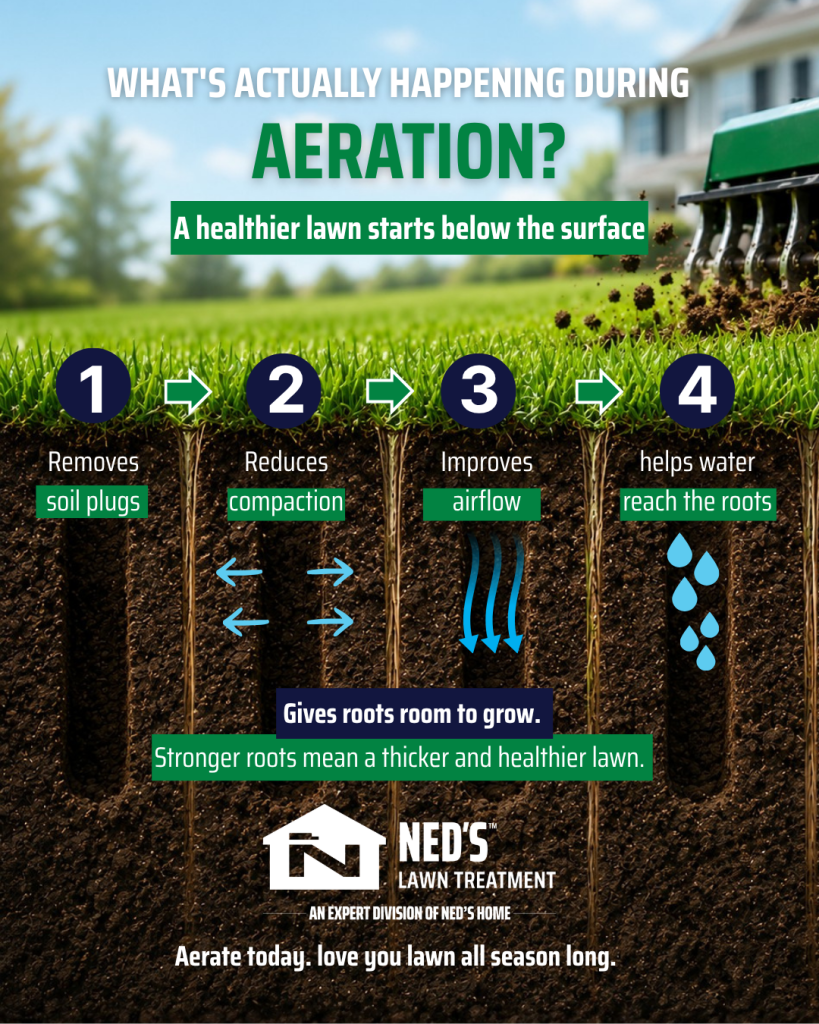
Overseeding Helps Restore What Summer Left Behind
Aeration improves the growing environment. Seeding helps address thin turf.
Grass can lose density over time because of heat, dry conditions, traffic and other stresses. Once those thin areas develop, existing grass may not fill them in quickly on its own.
Seeding introduces new grass into the existing lawn, helping establish growth where turf has become sparse.
And when seeding follows aeration, the openings created in the soil can help improve seed-to-soil contact, an important part of successful germination.
Together, aeration and seeding give a summer-stressed lawn an opportunity to recover.
A Healthier Lawn Isn’t an Overnight Result
Aeration and seeding aren’t instant cosmetic treatments.
It takes time for grass to germinate, establish roots, and mature. How quickly that happens depends on several factors, including grass variety, soil conditions, temperature and moisture.
Consistent moisture is particularly important for newly seeded areas. According to the University of Illinois Extension, adequate moisture is essential for grass seed to germinate and establish.
So, if your lawn doesn’t suddenly look thicker a week after treatment, that doesn’t mean nothing is happening.
Lawn recovery is a process.
What You’re Really Preparing or Is Next Spring
It’s easy to think of aeration and seeding as something you do because the lawn looks tired in August or September.
But the bigger picture extends beyond fall.
Aeration can help improve the soil environment for existing roots. Seeding can add new grass to areas that lost density during the growing season. Giving that new grass an opportunity to begin establishing in fall gives it time to develop before winter arrives.
Then, when growing conditions return, your lawn can be better positioned for healthy growth than if thin areas and compacted soil were simply left alone. That’s why skipping fall lawn care can have effects that aren’t obvious right away.
 Help Your Lawn Move On From Summer
A lawn that’s thin or stressed at the end of summer doesn’t necessarily mean something is wrong. It may simply be showing you what the season put it through.
Fall creates an opportunity to respond. Aeration helps relieve compacted soil and support the root zone. Seeding introduces new growth where the lawn needs more density. Together, they can help create the conditions for a healthier, fuller lawn.
And you don’t have to turn lawn recovery into another weekend project.
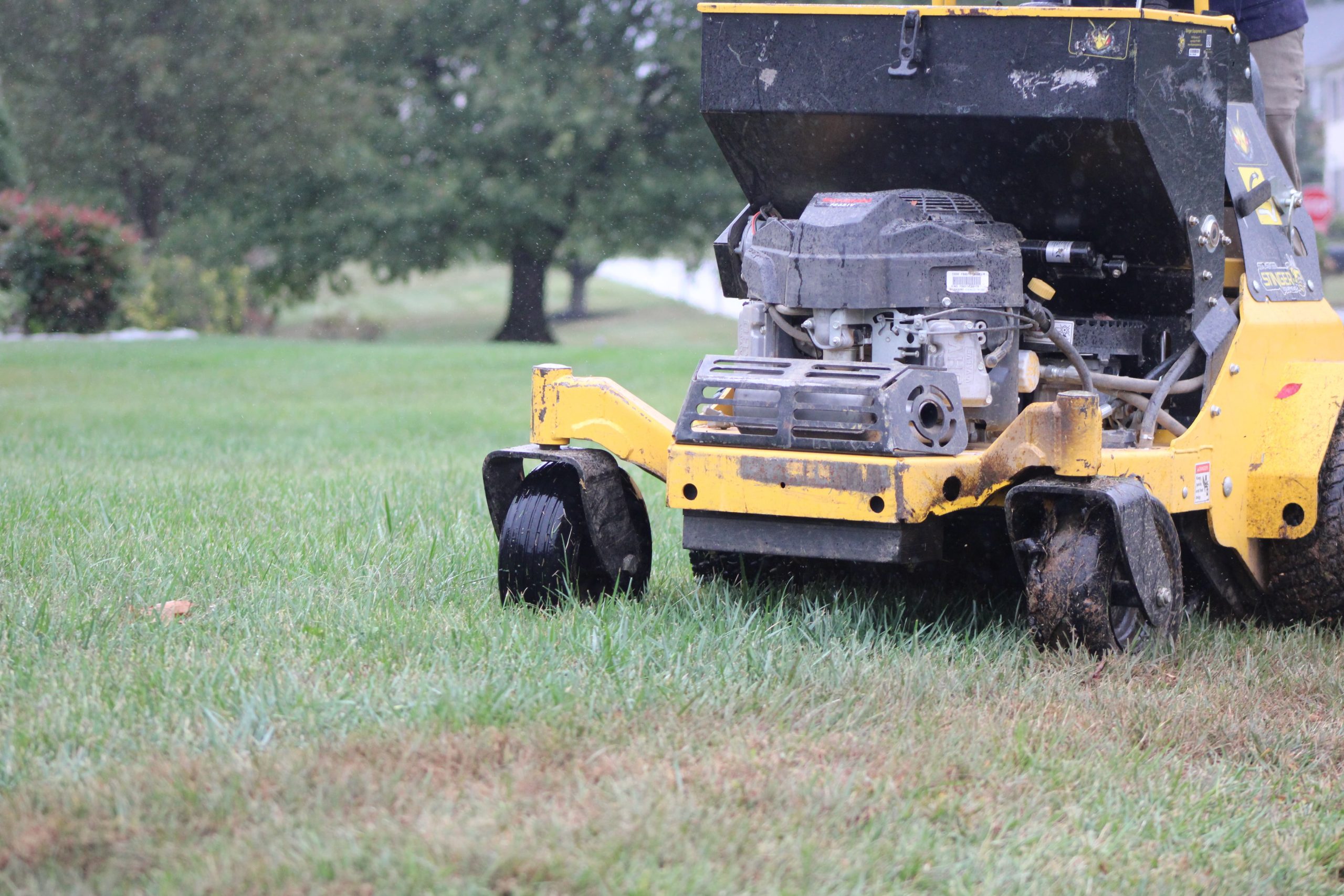
Ned’s Lawn Treatment offers Aeration & Overseeding to help give your lawn better growing conditions after a demanding summer. With the right fall care, you can help set your lawn up for healthier, fuller growth when the next growing season begins.