Could There Be Mice in Your Attic?
Have you heard scurrying above your ceiling at night or found damage in bins or boxes in your attic?
These could be signs of mice in your attic. Mice are quiet rodents that can go unnoticed for weeks, and attics provide a sheltered place to build nests with little human activity. Although mice can enter homes year-round, they may seek indoor shelter more frequently as temperatures drop in fall and winter.
Knowing what to look and listen for can help you recognize a potential problem before it gets worse.
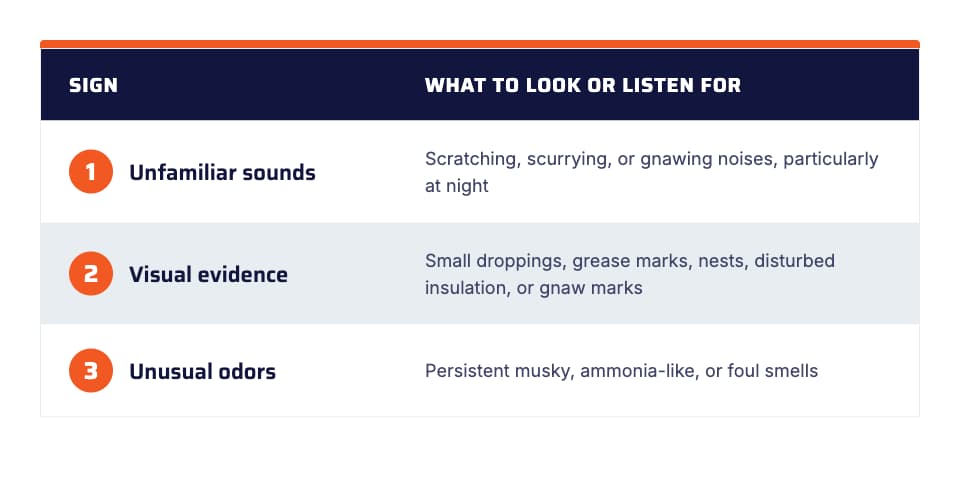
1. Unfamiliar Sounds From Your Attic
Noises above your ceiling are often the first reason homeowners suspect mice or another rodent. Here are three sounds to listen for:
Scratching Sounds
Mice can make light scratching or scraping sounds as they climb, move through insulation, or explore enclosed spaces. You might hear these noises above your ceiling or inside walls, particularly at night when the house is quiet.
Scratching that repeatedly comes from the same area is worth investigating, especially if you notice other signs of rodent activity.
Scurrying Sounds
Mice may be small, but they move quickly and can cause more noise than you would expect. Mice often travel in short bursts of light, rapid footsteps. These sounds may resemble faint tapping or rustling as mice travel across attic floors, wooden beams, or insulation.
Gnawing Sounds
Mice have front teeth that grow continuously, so they regularly gnaw on materials to wear them down. This can produce faint chewing, scraping, or grinding sounds.
In attics, mice may gnaw on wood, cardboard, plastic, and other accessible materials. If you hear repeated chewing sounds, it’s worth checking for physical damage.
Keep in mind: Noise from the attic isn’t exclusive to mice. Rats, squirrels, and other rodents and wildlife can make similar noises. Physical evidence, such as droppings and gnaw marks, can help identify the source.
2. Visual Signs of Mice in Your Attic
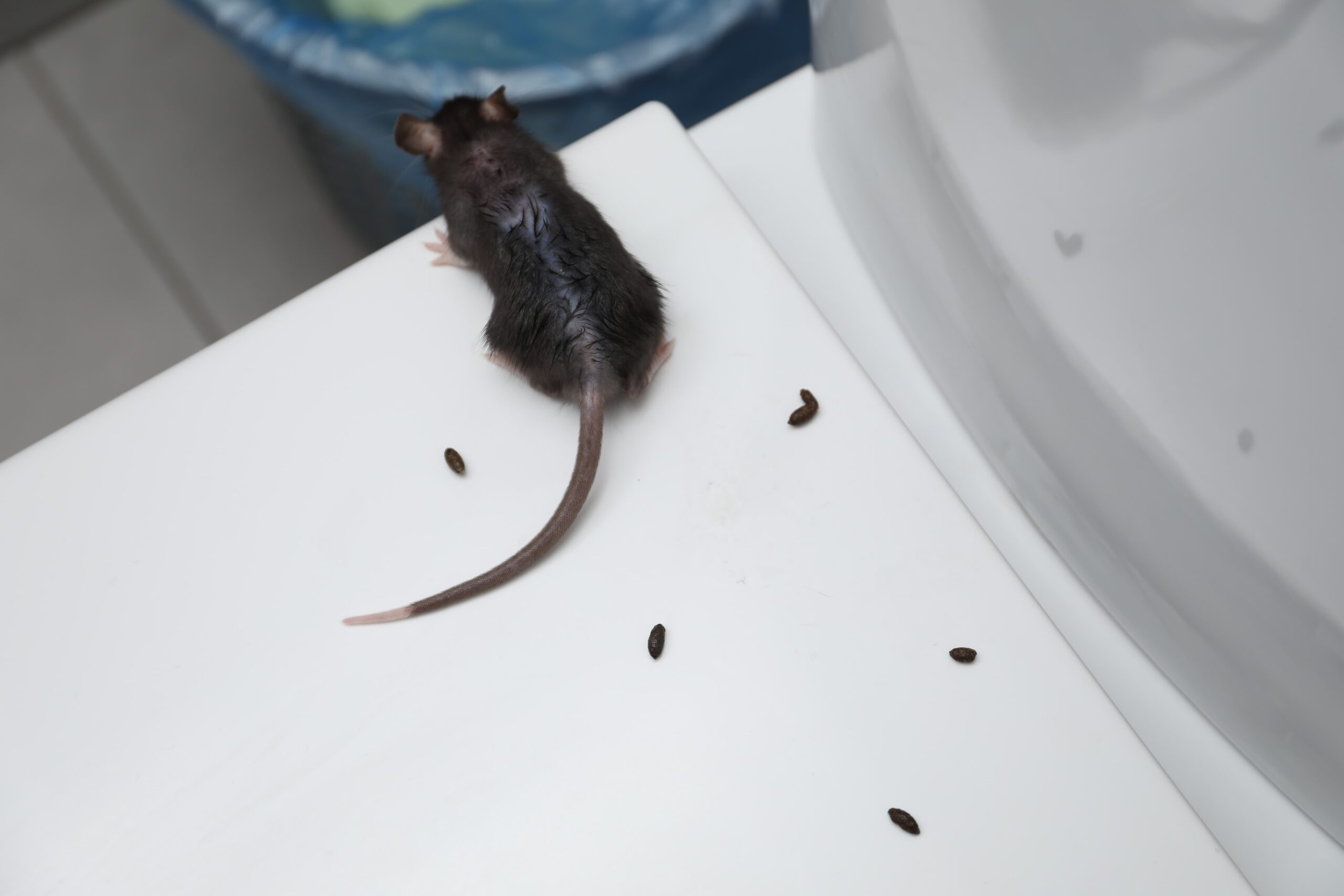
Seeing a live or dead mouse confirms its presence, but even if you never see a mouse, there are other visual cues they leave behind.
Mouse Droppings
Droppings are one of the clearest signs of rodent activity. They are typically dark, small, and shaped like grains of rice, measuring approximately ⅛ to ¼ inch long, often with pointed ends.
You may find droppings along attic edges, near stored boxes, around nesting areas, or along routes mice frequently travel.
Mice leave droppings throughout the day as they move and feed, so waste can accumulate in areas they regularly use. However, droppings alone don’t establish whether mice are still active. New droppings appearing after proper cleanup are a stronger indication of ongoing activity.
The Centers for Disease Control and Prevention (CDC) recommends taking precautions when cleaning rodent-contaminated areas, including avoiding dry sweeping or vacuuming.
Grease Marks and Tracks
Mice often follow the same paths as they travel between nesting areas and food sources. Over time, oils and dirt from their fur can leave dark smudges along walls, beams, pipes, and other surfaces.
These marks are often found where mice repeatedly squeeze through narrow openings or move along edges.
In dusty areas, you may also notice small footprints or tail marks. These can help identify frequently used travel routes, although marks alone may not reveal whether the activity is recent.
Mouse Nests
Mice build nests from soft, lightweight materials that provide warmth and shelter. Common nesting materials include shredded paper, cardboard, fabric, and insulation.
In attics, nests may be tucked into secluded corners, between structural supports, inside stored boxes, or beneath insulation. They often resemble loosely gathered piles or balls of shredded material. You might notice scattered pieces of insulation or paper near a nesting area even if the nest itself is hidden.
Tunnels Through Insulation
Mice can travel through loose attic insulation, creating small pathways.
You may notice areas where insulation appears flattened, separated, or displaced, particularly near walls, beams, or other sheltered spaces. These changes aren’t definitive proof of mice, since other animals and previous attic work can also disturb insulation. However, pathways accompanied by droppings, nests, or gnaw marks warrant further investigation.
Gnaw Marks and Damaged Materials
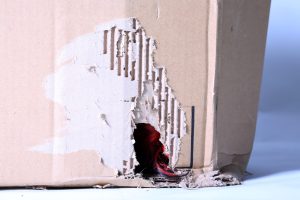
Mice can chew through cardboard boxes, paper, plastic, wood, and other materials commonly stored in attics.
Look for small tooth marks, rough edges, shredded packaging, or damage around openings. Mice may also gnaw on electrical wire insulation, potentially exposing conductors and creating a fire hazard.
If you discover damaged wiring, avoid touching it and contact a qualified electrician.
3. Odors Coming From Your Attic
A persistent, unpleasant smell can be another sign of mice in your attic, particularly when rodent activity has been occurring for some time.
Mouse urine can create a strong, musky or ammonia-like odor. The smell may become more noticeable near nesting areas or in spaces where urine and droppings have accumulated.
A dead mouse can also produce a distinct, foul odor as it decomposes, especially in enclosed spaces.
How Do Mice Get Into Your Attic?
You don’t need a large opening for a mouse to enter your home. According to the Environmental Protection Agency (EPA), mice can squeeze through gaps as small as ¼ inch, approximately the width of a pencil.
Common entry points include:
- Gaps around rooflines, eaves, and soffits
- Damaged or improperly screened vents
- Openings around pipes, cables, and utility lines
- Cracks or gaps around siding and exterior walls
- Openings near foundations that connect to wall cavities
Mice are attracted to attics because they provide shelter, nesting materials, and protection from outdoor conditions. They can also travel to other areas of the home to find food and water.
Why Are Mice in Your Attic a Problem?
Mice are more than an inconvenience. Even when they’re confined to an attic, their activity can affect your home and create potential health and safety concerns.
Health Risks
Mice can contaminate surfaces and materials with urine, droppings, and saliva. Depending on the rodent species and circumstances, exposure can contribute to the spread of illnesses such as salmonellosis and hantavirus.
Some infections can spread through contact with contaminated materials or by breathing in particles disturbed during improper cleanup.
Property Damage
Mice can damage insulation, stored belongings, and building materials as they move, nest, and gnaw. Chewed electrical wiring is a particular concern because it can create electrical and fire hazards. Mouse droppings and urine can also contaminate attic insulation, potentially requiring affected materials to be thrown away.
A Small Problem Can Grow
Mice reproduce quickly under favorable conditions. Female house mice can produce as many as 8 litters a year, with 5-6 pups per litter.
That doesn’t mean every mouse sighting indicates a major infestation. However, mice that have access to shelter and food may establish a breeding population if the problem isn’t addressed.
What to Do If You Notice Signs of Mice in Your Attic
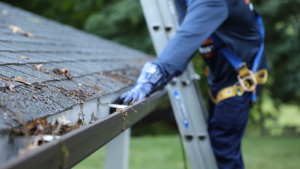
If you suspect mice in your attic, it’s important to address the problem before activity increases or additional damage occurs.
While traps can help remove mice, they don’t address how mice are getting inside. Identifying and sealing entry points is an important part of preventing future activity, but doing so safely and effectively can be challenging.
Ned’s Pest Control provides professional rodent control services to help identify signs of an infestation, locate potential entry points, and determine an appropriate treatment approach.
Don’t wait for repeated noises or visible damage to investigate a possible mouse problem.