
As temperatures drop, mice begin looking for protected places with dependable access to food, water, and nesting material. A home, garage, shed, or crawl space can provide all three. If you are wondering how to keep mice out of your house in winter, the most effective approach is to block the ways they enter and remove the conditions that encourage them to stay.
The earlier you act, the easier it is to prevent rodent activity from becoming a larger problem. Use this guide to find and close potential entry points, reduce the conditions that attract mice, and understand when professional help may be needed.
Why Do Mice Come Inside in Winter?
As temperatures cool, food, water, and shelter can become less reliable for mice outdoors. Homes and other enclosed buildings provide protection from the elements, along with potential access to pantry food, pet food, birdseed, garbage, and materials that can be used for nesting.
They do not need a wide-open door to get inside. According to the Centers for Disease Control and Prevention (CDC), a mouse can fit through a hole about 1/4 inch wide, roughly the width of a pencil. Gaps around utility lines, doors, vents, siding, roofing, and the foundation can all become entry points.
5 Steps to Keep Mice Out of the House in Winter
Focus on exclusion first. Repellents and traps cannot make up for entry points that remain open.
1. Inspect the Outside of Your Home
Walk around the exterior and look closely from the foundation to the roofline. Pay particular attention to:
- Cracks or gaps where the foundation meets the ground
- Openings around plumbing, electrical, cable, gas, and HVAC lines
- Gaps beneath exterior doors and garage doors
- Damaged weatherstripping, screens, siding, soffits, or vent covers
- Openings around attic vents, crawl-space vents, eaves, and roof edges
Inspect inside those same areas as well. Look beneath sinks, behind appliances, around the water heater and furnace, inside closets, and along the points where floors meet walls.
2. Seal Gaps With Rodent-Resistant Materials
For small holes, the CDC recommends filling the opening with steel wool and securing it with caulk or spray foam. Larger openings may require metal, hardware cloth, lath screen, cement, or another durable patching material. Replace damaged screens and weatherstripping, and install door sweeps where light or air is visible beneath a closed door.
Do not cover or restrict working vents. Repair the gap around a vent or use an appropriate pest-resistant cover that preserves required airflow. When an opening involves roofing, wiring, gas lines, or another building system, use a qualified professional.
3. Remove Easy Sources of Food and Water

Mice are more likely to remain where food and water are easy to reach. Make those resources harder to access:
- Store pantry goods, pet food, birdseed, and grass seed in sturdy containers with tight-fitting lids
- Clean crumbs and spills promptly, including beneath appliances
- Put pet food and water bowls away overnight
- Use garbage cans with tight-fitting lids and empty them regularly
- Repair leaks and remove standing water where possible
5. Continue Checking Throughout the Season
Exclusion is not a one-time task. Weather, repairs, and normal wear can create new gaps. Recheck likely entry points and storage areas during the winter. Signs of rodents in the house can include fresh droppings, gnaw marks, nesting materials, damaged food packaging, unusual odors, or noises in walls or attics.
When to Consider Professional Rodent Control
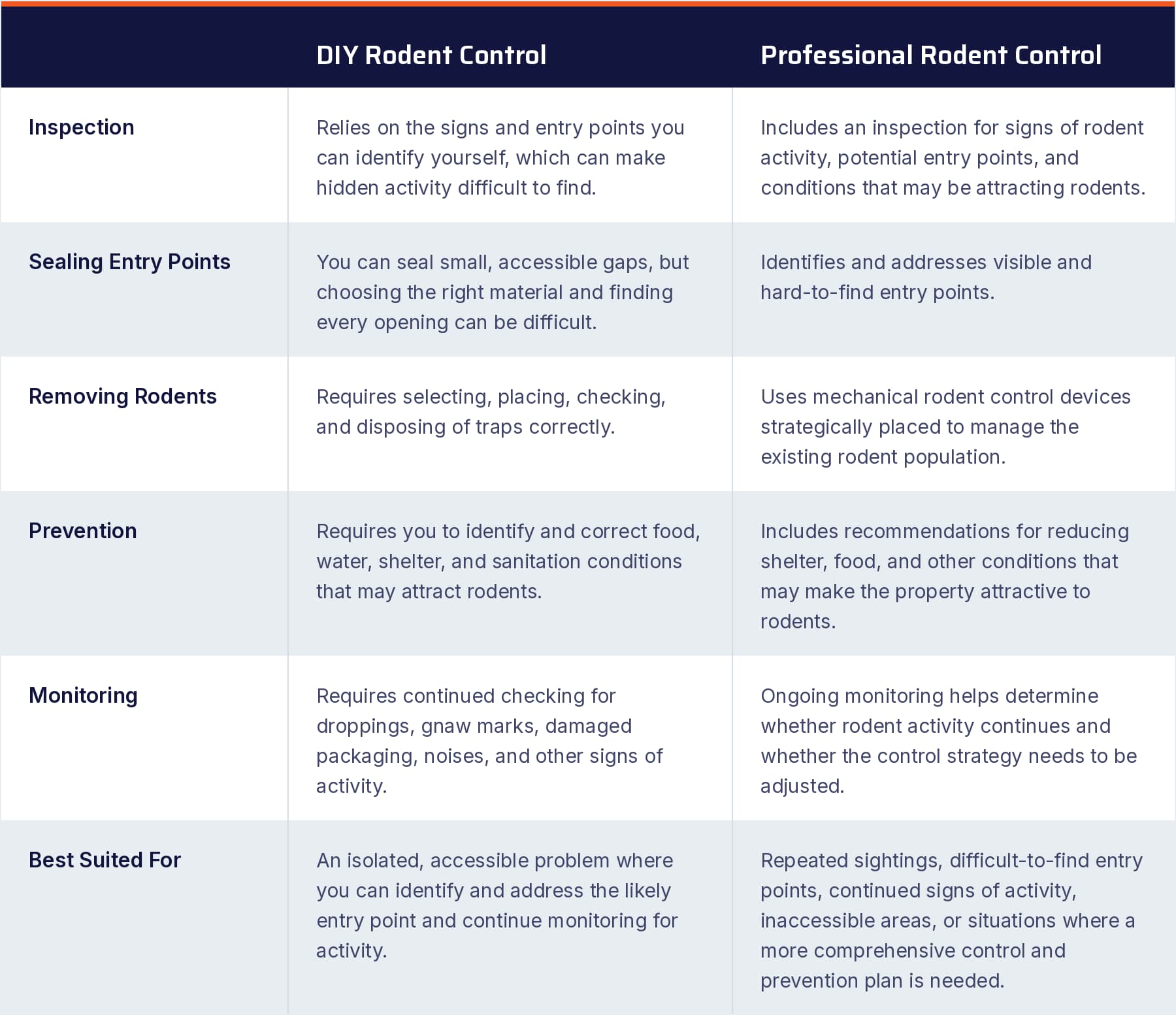
Catching a mouse may address the immediate problem, but it does not explain how the mouse entered or whether there are additional rodents hidden elsewhere.
Compare what is involved with handling the problem yourself versus hiring a professional.
Start With a Rodent Control Plan
DIY steps may help with an isolated issue or reduce conditions that attract mice, but finding and addressing a rodent problem can be more difficult than it appears. Rodents may be entering through hard-to-find openings or nesting in areas you cannot easily access.
Ned’s Pest Control provides both preventive and active rodent control. Our licensed technicians inspect the property to identify signs of activity, potential entry points, and conditions that may be contributing to the problem.
Learn more about our Rodent Control services or request a free quote.