You found a wasp nest in your yard. The species, the location, and the size of the colony all affect how dangerous it is and how it needs to be handled. Here’s what to know before you do anything.
Wasp, Hornet, or Yellow Jacket? Here’s How to Tell.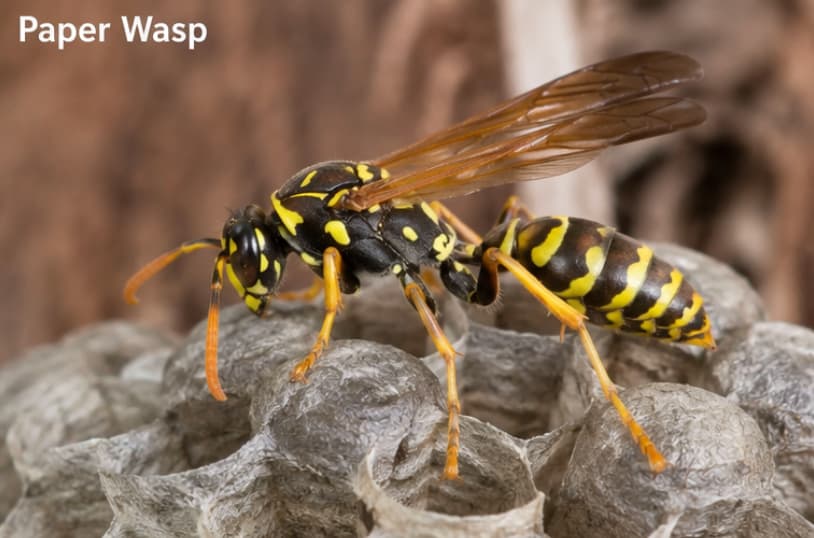
Not all stinging insects behave the same way. Here’s how to tell what you’re dealing with.
Paper Wasps are slender with long legs that dangle in flight. Their nests look like a small, open honeycomb and are typically found under eaves, porch ceilings, or fence rails. Paper wasps are relatively non-aggressive unless you get close to the nest.
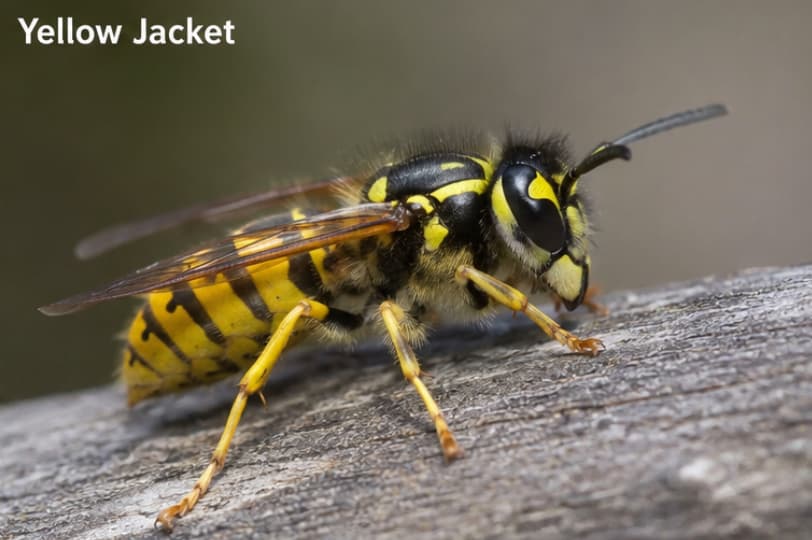
Yellow Jackets are the ones most likely to crash your cookout. Compact, black and yellow, and easily provoked, yellow jackets build nests underground or inside wall voids, which makes them particularly dangerous because you can stumble onto a nest without any warning. Unlike paper wasps, yellow jackets can sting repeatedly, and colonies can number in the thousands by late summer.
Bald-Faced Hornets build the large, enclosed, football-shaped nests you sometimes see hanging in trees or on the sides of structures. They’re aggressive
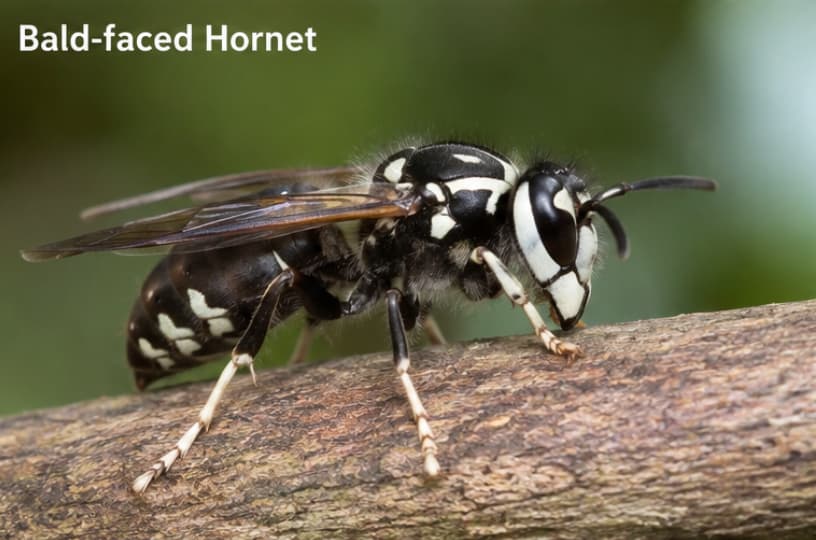
defenders of their territory and can spray venom as well as sting. Don’t approach a bald-faced hornet nest.
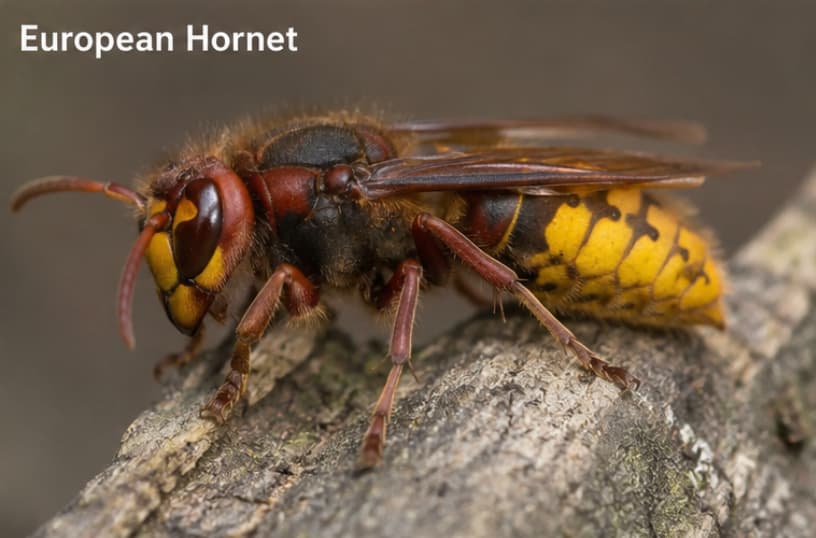
European Hornets are the largest common stinging insects in the U.S., up to an inch and a half long. They often nest in hollow trees, wall voids, or attic
s. Notably, they’re active at night, which surprises a lot of homeowners.
What About Bees?
If what you’ve found looks more like a traditional hive than a wasp nest, you may be
dealing with honeybees, bumblebees, or
carpenter bees. Bees require a different removal approach than wasps or hornets, and in some cases, relocation rather than extermination.
How to Identify a Wasp Nest by Location
Location is usually your best clue:
- An open, papery comb in a sheltered spot is typically a paper wasp nest.
- A large, enclosed gray structure in a tree or on the house points to bald-faced hornets.
- Insects flying in and out of a ground hole are usually yellow jackets or ground-nesting bees.
- Activity around a tree hollow, wall void, or attic vent suggests European hornets or a large yellow jacket colony.