
Most homeowners don’t find termites. They find the aftermath: a doorframe that suddenly won’t close, a baseboard that sounds strange when you knock on it, a patch of paint that’s started to bubble for no clear reason. The signs of termites are usually there well before the damage is obvious, but they’re easy to mistake for something else, or to miss entirely if you don’t know where to look. This guide walks through what to check, room by room, and how to tell a termite sign from a false alarm.
Why These Signs Get Missed
Termites are called silent destroyers because they feed inside wood, not on the surface. According to the National Pest Management Association, termites cause an estimated $6.8 billion in property damage each year in the U.S.
Part of what makes termites difficult to spot is that possible signs can overlap with normal wear and tear. A sticking door, a squeaky floor, or a small crack in drywall can mean a dozen things that have nothing to do with pests. The goal isn’t to panic at every creak in your house. It’s to know which specific signs are worth a closer look, and where termites tend to leave them.
Signs of Termites Indoors
Walls and baseboards
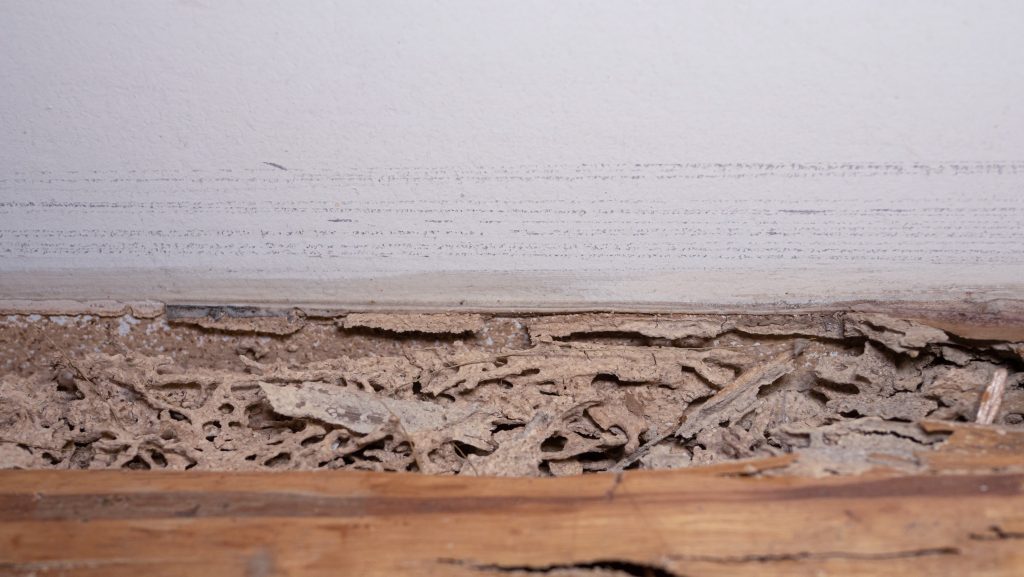
Tap along the baseboard and lower wall with the handle of a screwdriver. Wood that’s been damaged from the inside may sound hollow compared with the solid wood around it. Also look for small, pinhole-sized openings, unusual surface damage, or bubbling and peeling paint. These don’t necessarily mean termites are present, but when they appear alongside other signs of termite activity, they’re worth a closer look.
Baseboards and window sills
Here you may find termite droppings, small, ridged pellets that drywood termites push out of tiny exit holes as they tunnel. They collect in tiny piles that get mistaken for sawdust, sand, or coffee grounds. If you’re not sure what you’re looking at, our termite prevention guide has a closer look at frass and how it differs between termite species.
Ceilings
Water stains and sagging drywall usually point to a roof or plumbing issue, but if you’ve ruled those out and the sagging is paired with hollow-sounding wood nearby, termites feeding on ceiling joists or rafters are worth checking for.
Floors
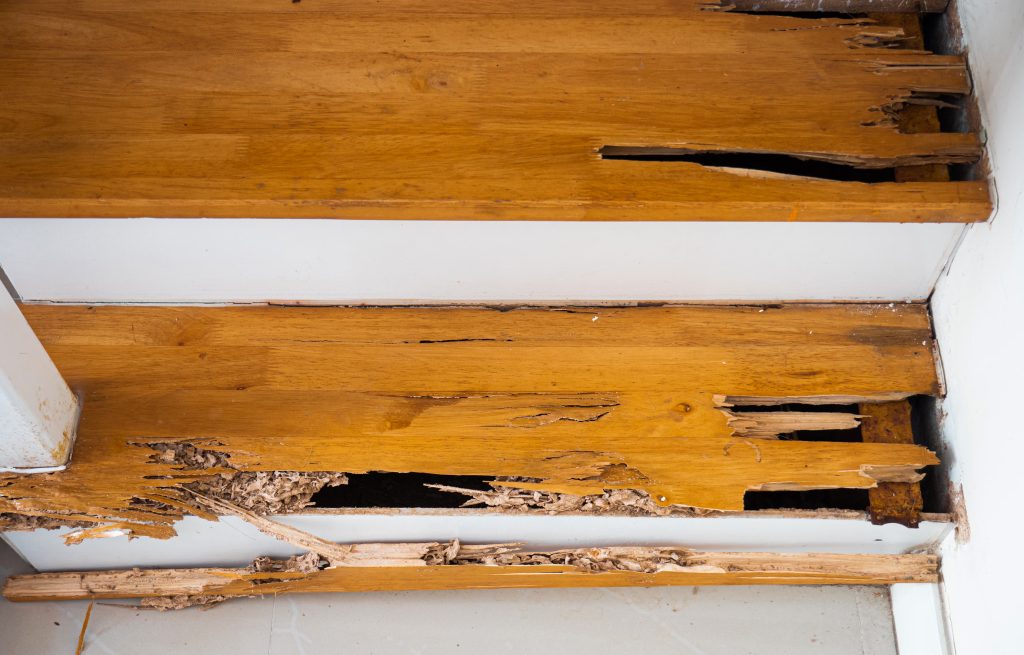
Squeaking that’s new, tiles that have started to lift on their own, or a soft spot you can feel through carpet or flooring can indicate termite damage to the subfloor or joists underneath.
Doors and windows
Termite damage can weaken wood in door and window frames. If a door or window has started sticking and there’s no obvious humidity or seasonal cause, it’s worth taking a closer look at the frame.
Quiet Rooms
Termites are occasionally audible. In a quiet room, especially at night, a faint clicking or tapping from inside a wall can be soldier termites signaling the colony. It’s not common, but it’s a real sign worth listening for if everything else points the same direction.
Signs of Termites Outdoors
Outdoor checks matter just as much, since termites often reach a house from the ground up before they’re ever visible inside.
- Wood that feels soft, spongy, or crumbles easily. Check deck boards, fence posts, and anything wood that touches soil.
- Discarded wings near outdoor lights, on windowsills, or caught in spiderwebs near the foundation. This means a swarm has already happened nearby.
- Mud tubes running up the foundation. These are covered in more detail in our termite prevention guide, since they’re one of the clearest signs of an active subterranean colony.
Signs That Look Like Termites, But Aren’t
A lot of what gets flagged as a termite problem turns out to be something else. Knowing the difference saves you a call, or tells you which call to make.
Termites vs. Flying Ants
Both swarm and both have wings, which is why this mix-up is so common. Termite swarmers have straight, bead-like antennae, a thick waist, and two pairs of wings that are the same length. Flying ants have bent antennae, a pinched waist, and wings of two different lengths. If you’re not confident which one you’re looking at, save one if you can. It makes identification much faster for whoever inspects your home. You can also use our guide to tell the difference between ants and termites for a closer comparison.
Termite Damage vs. Water Damage
Termite damage and water damage can look surprisingly similar. Both can leave behind soft or damaged wood, discoloration, and changes to painted surfaces. There are a few clues that can help you tell them apart. Water-damaged wood may look swollen, warped, stained, or feel soft, especially if an active moisture problem is nearby. Termite-damaged wood may sound hollow when tapped or reveal tunnels and grooves beneath the surface.
But appearance alone isn’t always enough to tell the difference. Moisture can also create conditions that attract certain termites, and older water damage may no longer feel wet.
Termite Damage vs. General Wood Rot
Wood rot (fungal decay) also hollows out wood, but it may come with a musty smell and a crumbly, stringy texture that falls apart in your hand. Termite tunnels tend to run along the wood grain and leave thin, curved partitions inside, more structured than rot’s random breakdown.
None of these comparisons are a substitute for a professional inspection, but they’re worth knowing if you’re concerned you’re seeing signs of termites.
Simple Checks You Can Do
You don’t need special equipment to do a basic self-inspection.
- Tap test. Use the handle of a screwdriver to tap along suspect wood. A dull or hollow sound, especially compared to nearby wood that sounds solid, is worth flagging.
- Flashlight check. Shine a light at a low angle across baseboards, sills, and door frames. Raking light makes small holes, frass piles, and surface damage easier to spot than direct overhead light does.
- Moisture check. If you have a moisture meter, unusually damp wood in a spot that shouldn’t be wet is worth a second look, since it’s often where termite activity concentrates.
If you find a clear sign of termite activity, several suspicious conditions in the same area, or simply aren’t sure what you’re seeing, it’s time to move from self-inspection to a professional one.

When to Call a Professional
A licensed pest control technician brings the knowledge and tools most homeowners don’t have on hand. If you’ve found one or more of the signs above, or you’re not confident about what you’re looking at, that’s exactly the situation a termite inspection is built for.
Ned’s Pest Control licensed technicians will fully inspect your property, identify signs of termite activity, and walk you through next steps if termite control is needed. A professional inspection can give you a clearer answer about what’s happening and what, if anything, needs to be done.