
Ice dams are a common winter roofing issue that can lead to leaks, water damage, and costly repairs if left untreated. While they’re most common in colder climates, any home that experiences snow and freezing temperatures can be at risk.
Knowing what causes ice dams and how to prevent them can help protect your roof, gutters, and home during winter and early spring.
What Are Ice Dams?
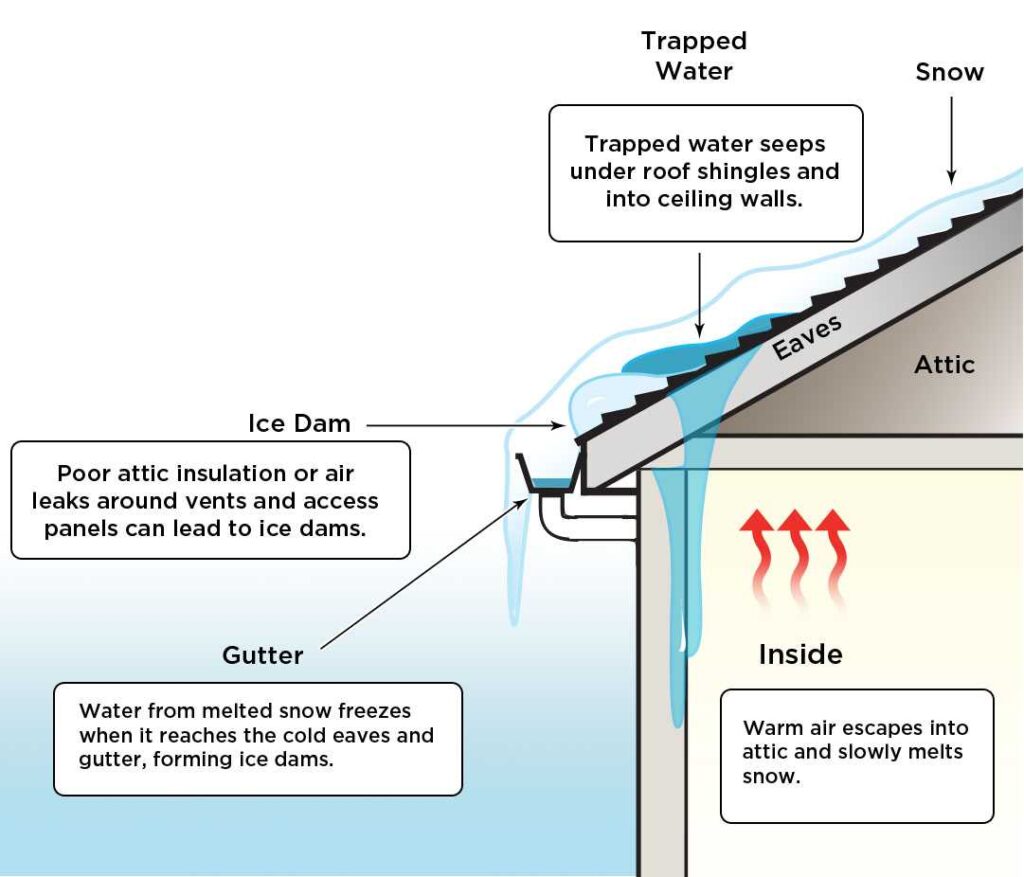
Ice dams are ridges of ice that form along the edges of a roof, typically near the gutters. They block melting snow from draining properly, causing water to back up under roof shingles.
When water has nowhere to go, it can seep into your home and damage ceilings, walls, insulation, and personal belongings. Over time, this trapped moisture can also contribute to mold and mildew growth, which can affect your home’s air quality and your family’s health.
What Causes Ice Dams?
Ice dams form due to a combination of snow buildup and uneven roof temperatures.
Here’s how it happens:
- Snow accumulates on the roof
- Heat from inside the home warms the upper portion of the roof
- Snow melts and flows downward
- When the water reaches colder roof edges, it refreezes
This freeze-thaw cycle repeats, allowing ice to build up along the roofline. As the ice dam grows, additional melting snow pools behind it and can force its way beneath shingles.
Poor insulation, inadequate ventilation, and clogged gutters all increase the likelihood of ice dams forming. While ice dams can still occur even when gutters are clean, clear gutters help melting snow drain properly and reduce the risk of water backing up onto the roof.
Ice dams are most common in areas that experience snowfall and fluctuating winter temperatures, but they are not limited to consistently cold climates. Homes in regions with frequent temperature swings, especially in late winter and early spring, are often at higher risk when melting snow refreezes along the roof’s edge overnight. This is something we see regularly across our service areas, even in places where heavy snow is not the norm.
Why Ice Dams Are Problems for Homeowners
Ice dams are more than just a winter nuisance. They can cause serious and expensive damage, including:
- Roof leaks and water damage
- Stained or sagging ceilings
- Damaged insulation
- Mold and mildew growth
- Gutter and fascia damage
Because ice dams often form gradually, homeowners may not notice them until damage has already occurred.
How to Prevent Ice Dams
The best prevention of ice dam formation is reducing the conditions that allow them to form in the first place.
Key prevention tips include:
- Keep your gutters clean and clear so melting snow can drain properly
- Remove excess snow from the roof using a snow rake after heavy snowfall
- Improve attic insulation and ventilation to keep roof temperatures consistent
- Seal air leaks around attic access points, lights, and vents
Spring and fall are ideal times to inspect your roof and gutters to ensure everything is ready before winter weather hits.
What to Do If You Have an Ice Dam
If you notice a ridge of ice forming along your roofline, it’s important to act quickly.
What you can do:
- Carefully remove snow from the roof using a snow rake
- Make sure gutters are as clear as possible
- Avoid chipping or breaking ice with tools, which can damage shingles
Ice dams can be difficult and dangerous to remove without the right tools and experience. If they persist or you notice signs of water damage inside your home, it is best to contact a professional for ice dam services.
Contact Ned Stevens Gutter Installation Team at 888-457-4809. Our professionals are here to help keep your home and family safe.