Mosquitoes make it hard to enjoy your yard during the warmer months. Whether you’re trying to relax on the patio, grill with friends, or let the kids play outside, constant mosquito activity can quickly become a frustrating health hazard.
The truth is, they don’t need much to set up shop in your yard. A forgotten bucket. A clogged gutter. A patch of tall grass along the fence line.
Here’s how to get rid of mosquitoes in your yard and keep them from coming back.
Why Mosquitoes Are Attracted to Your Yard
Mosquitoes are breeding in your yard, and they don’t need a pond to do it. A female mosquito can lay eggs in as little water as a bottle cap can hold.
Three things make your yard a target:
- Standing water is where mosquitoes lay eggs
- Shade and overgrowth are where adult mosquitoes rest
- Warm, humid weather makes everything worse
Most DIY mosquito solutions only target the mosquitoes you can see flying around. To reduce mosquito activity long term, you need to eliminate breeding areas and make your yard less hospitable for them.
Step 1: Eliminate Standing Water
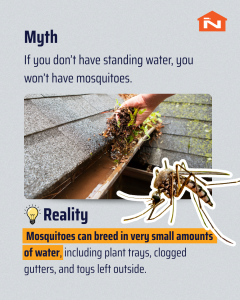 This is the single most effective thing you can do. Mosquitoes breed in standing water, and they don’t need much of it.
Check your yard for:
- Gutters that are clogged or draining slowly
- Plant saucers, buckets, or containers collecting rainwater
- Low spots in the lawn that stay wet after rain
- Birdbaths or decorative water features that aren’t being refreshed
- Tarps, old tires, or yard equipment holding water
- Tree holes or hollow stumps
Empty anything that holds water. Empty and refill birdbaths and pet bowls every few days. For water you can’t remove, like a pond, mosquito dunks can help kill larvae before they hatch and are generally safe for pets and wildlife when used properly.
Don’t Ignore Clogged Gutters. They are one of the most overlooked mosquito breeding sites around homes. Water that pools in a blocked gutter can sit for weeks, creating ideal conditions for mosquitoes. If your gutters haven’t been cleaned recently, that’s a good place to start.
Step 2: Reduce Shade and Overgrowth
Adult mosquitoes spend most of the day resting in cool, shaded spots like tall grass, dense shrubs, and woody areas. Making your yard less hospitable for mosquitos helps reduce their populations naturally.
Ways to reduce mosquito hiding spots include:
- Mow regularly and keep grass under two inches
- Trim back overgrown bushes and hedges
- Clear out leaf piles, wood stacks, and yard debris
- Prune back trees and vegetation that block sunlight
More sunlight reaching your yard helps wet areas dry faster after rain.
Step 3: Use Mosquito Treatment for Your Yard
Once you’ve addressed breeding grounds and resting spots, targeted treatment helps reduce the adult mosquito population.
Store-bought sprays may provide temporary relief, but professional mosquito treatment is typically more effective and longer lasting because it targets high-risk areas throughout the yard.
A professional mosquito treatment can:
- Identify hidden breeding areas
- Apply targeted barrier treatments
- Reduce mosquito activity between visits
- Help maintain control throughout mosquito season
For homeowners dealing with persistent mosquito problems, recurring seasonal treatment is often the most reliable solution.
Step 4: Make Your Yard Less Mosquito-Friendly
A few small adjustments can also help reduce mosquito activity around patios, decks, and entertaining areas.
- Use outdoor fans since mosquitoes are weak fliers
- Switch to warm LED bulbs outdoors because cooler, brighter lights attract more insects
- Avoid standing water near seating areas
- Consider mosquito-repelling plants like citronella, basil, lavender, and marigolds
When to Call a Professional
DIY methods can help, but they have limits and typically only provide temporary relief. Many store-bought treatments only target active mosquitoes and may not address breeding areas throughout the yard. If mosquitoes keep coming back despite your prevention efforts, it’s time to bring in a professional.
Ned’s Pest Control offers seasonal mosquito treatment that targets both adult mosquitoes and breeding areas throughout your property using products that are safe for your family and pets when professionally applied.
The first treatment can significantly reduce mosquito activity so you can enjoy your yard again. A recurring plan keeps mosquitoes under control throughout the season.