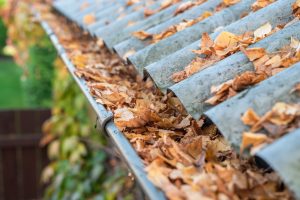
A Seasonal Guide for Homeowners Who Want to Stay Ahead of the Problem
Gutters do one job: move water away from your home.
When they’re clogged, the damage shows up in places you don’t expect: your foundation, your fascia, your roofline, your interior walls. The question isn’t whether to clean them. It’s how often to clean gutters.
The Short Answer
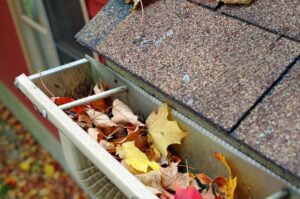
Most homes need 4–6 cleanings per year, with extra attention in the fall.
A practical baseline looks like this:
- End of winter (post-thaw reset)
- Late spring (after pollen and seed drop)
- Early fall (before the leaves fall)
- 2–3 times during peak fall leaf drop
From there, you adjust based on your home.
What Determines How Often to Clean Gutters
Tree coverage is the biggest variable. Heavy cover means 5-6 cleanings per year, moderate coverage calls for 3-4, and minimal tree exposure may only need 2-3. And it’s not just leaves – seeds, needles, and shingle grit pack tightly and block flow faster, and they’re harder to spot from the ground.
Local weather shapes the stress on your system. The Northeast and Midwest deal with heavy fall drop and spring snowmelt. The Southeast handles frequent storms and high organic buildup year-round. The Pacific Northwest gets wind-driven debris followed by sudden rain after dry stretches. Wind, in particular, loads gutters with debris long before rain exposes the problem.
Roof and gutter design matters more than most people realize. Low-pitch roofs move debris slowly. Complex rooflines create collection points. Older gutters with seams catch buildup faster than seamless systems. No gutter design is self-cleaning, including gutter guard systems. They all need regular maintenance to perform the way they should.
Gutter Cleaning Frequency by Season
Late Winter (February-April)
Winter leaves a residue. Stuck debris loosens during the thaw, shingle grit builds up, and ice can loosen or separate gutter sections. One thorough cleaning before spring rain hits will set the system up for the season ahead. Check for sagging, separation, and joints that need resealing while you’re at it.
Late Spring (May-July)
Pollen, seed pods, and fine organic matter pack into gutters in ways that don’t always look obvious from the ground. One cleaning near the end of the season, with a close look at downspout flow, is usually enough to keep things moving.
Late Summer / Early Fall (August-September)
This is the setup window. Wind and early storms push debris into the system before fall officially starts. Clearing it now prevents compounding problems when the heavy drop begins.
Fall (October-November)
This is a critical period. Leaves drop faster than most people expect, and waiting until the end of the season usually means compacted debris, overflow during rain, and extra weight stressing the gutters. Not to mention the risk of freezing with rapidly dropping temperatures. Plan for 2-3 cleanings: early fall, mid-fall, and a final pass before the first freeze. That last cleaning matters most. It’s what sets you up for winter.
Mid-Winter (December-January)
Avoid cleaning during active snow and ice. The risk isn’t worth it and a full cleaning cannot be performed in freezing temperatures.
If there’s an urgent issue, it’s better handled with the right equipment and safety protocols than a DIY approach on a frozen roofline.
What Happens When You Let It Go
Clogged gutters don’t fail dramatically. They fail gradually. Water spills over and pools near the foundation. Fascia and roof edges rot. Ice dams form in winter. Moisture finds its way inside. These problems build slowly, then show up all at once, usually during a rainstorm, when the system is under the most stress.
The cleanup is almost always more expensive than the maintenance would have been.
When It Makes Sense to Bring In a Pro
Most homeowners are better off having this handled professionally.
The value isn’t just clearing debris. It’s safe access, a full system check, and knowing the job was done thoroughly. Gutters don’t fail loudly, so confidence in the work matters.
For busy homeowners, it’s also one less thing to manage. No ladders, no timing it around weather, no second-guessing if everything is clear.
If your home has multiple stories, a steep roofline, or heavy tree coverage, the case is even stronger. But even in simpler setups, outsourcing removes the burden and reduces the risk of missing something that turns into a bigger issue later.
How Ned’s Home Handles It
Ned’s Home offers gutter cleaning service plans built around the schedule your home actually needs. Our plans cover the cleanings that matter most: the post-winter reset, the spring pass, and the fall sequence when buildup moves fastest. Every visit includes a full system inspection, so you know everything is flowing, seated, and ready for whatever comes next.
No ladders. No guessing. Just gutters that work.
See our gutter cleaning plans or get a quote for your home.
The Bottom Line 
Plan for 4-6 cleanings per year, with your heaviest attention in fall. Adjust based on your trees, your weather, and how your home is built.
Stay ahead of the buildup, and your gutters will keep doing what they’re designed to do: move water away from your home, quietly, every time it rains.