15,000+ 5-Star Reviews – See What Customers Are Saying

Wasp Nest in Your Yard? Here’s What to Do Next

You found a wasp nest in your yard. The species, the location, and the size of the colony all affect how dangerous it is and how it needs to be handled. Here’s what to know before you do anything.

Wasp, Hornet, or Yellow Jacket? Here’s How to Tell.Close-up of a paper wasp standing on an exposed paper nest. The wasp has a slender body, long orange legs, and yellow-and-black markings, with open hexagonal nest cells visible beneath it.
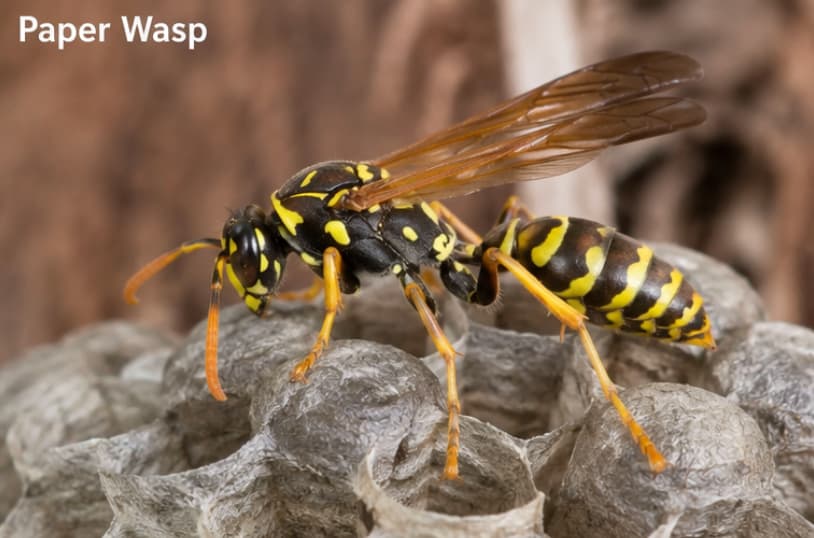
Not all stinging insects behave the same way. Here’s how to tell what you’re dealing with.

Paper Wasps are slender with long legs that dangle in flight. Their nests look like a small, open honeycomb and are typically found under eaves, porch ceilings, or fence rails. Paper wasps are relatively non-aggressive unless you get close to the nest.
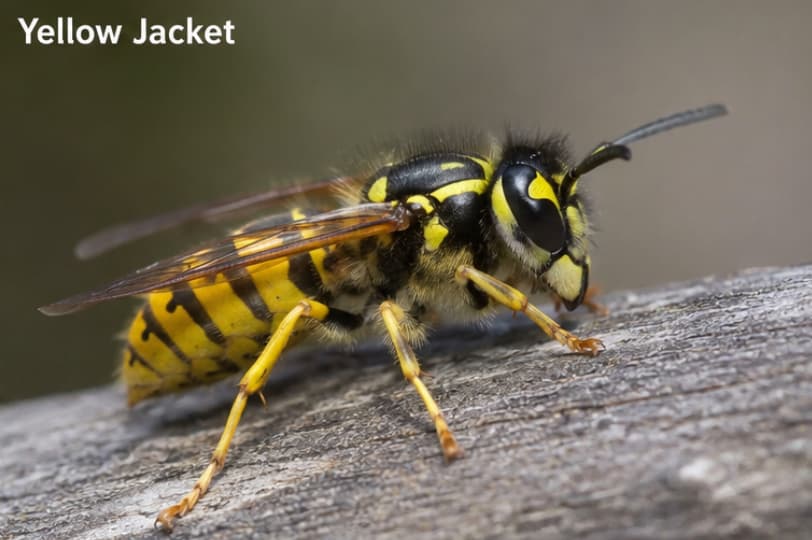
Macro image of a yellow jacket resting on weathered wood. The insect has a compact body with bold black-and-yellow stripes, short legs, and folded wings.

Yellow Jackets are the ones most likely to crash your cookout. Compact, black and yellow, and easily provoked, yellow jackets build nests underground or inside wall voids, which makes them particularly dangerous because you can stumble onto a nest without any warning. Unlike paper wasps, yellow jackets can sting repeatedly, and colonies can number in the thousands by late summer.

Bald-Faced Hornets build the large, enclosed, football-shaped nests you sometimes see hanging in trees or on the sides of structures. They’re aggressive
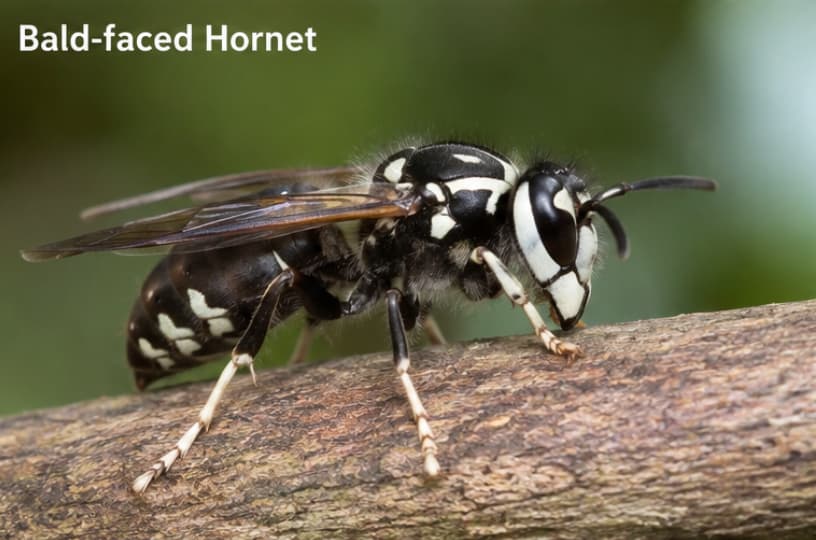
Close-up of a bald-faced hornet perched on a tree branch. The hornet has a black body with distinctive white markings on its face, thorax, and abdomen.

 defenders of their territory and can spray venom as well as sting. Don’t approach a bald-faced hornet nest.

European Hornets are the largest common stinging insects in the U.S., up to an inch and a half long. They often nest in hollow trees, wall voids, or attic

s. Notably, they’re active at night, which surprises a lot of homeowners.

What About Bees?
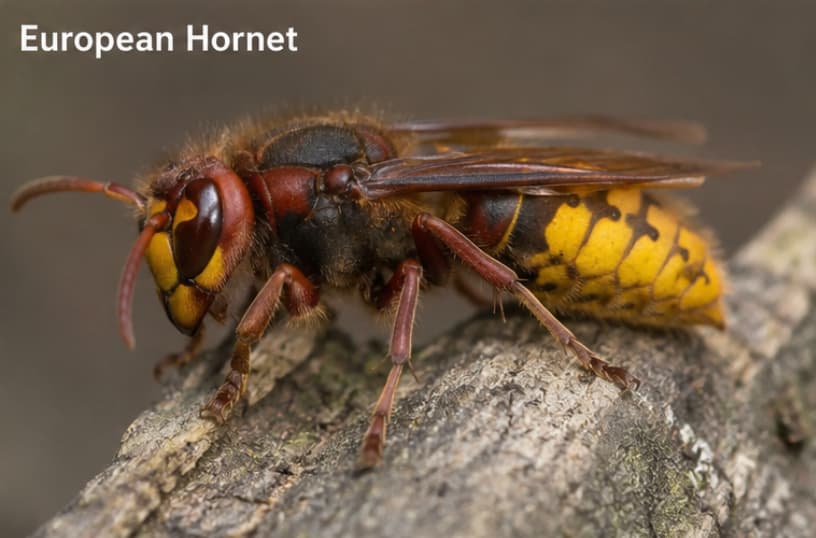
Macro image of a European hornet on rough bark. The hornet has a reddish-brown head and thorax, amber wings, and a yellow abdomen marked with dark bands.

If what you’ve found looks more like a traditional hive than a wasp nest, you may be

 dealing with honeybees, bumblebees, or

 carpenter bees. Bees require a different removal approach than wasps or hornets, and in some cases, relocation rather than extermination.

How to Identify a Wasp Nest by Location

Location is usually your best clue:

  • An open, papery comb in a sheltered spot is typically a paper wasp nest.
  • A large, enclosed gray structure in a tree or on the house points to bald-faced hornets.
  • Insects flying in and out of a ground hole are usually yellow jackets or ground-nesting bees.
  • Activity around a tree hollow, wall void, or attic vent suggests European hornets or a large yellow jacket colony.

Comparison chart of paper west, yellow jacket, bald-faced hornet, and european hornet nests

If you’re not sure, observe from a distance and note where the insects are entering and exiting. Don’t try to get closer for a better look.

Should You Remove a Wasp Nest Yourself?

Here’s the problem with DIY wasp nest removal: when wasps feel threatened, they release an alarm pheromone that signals the rest of the colony to attack. With yellow jackets especially, that can mean hundreds of stings in seconds. If you’ve got a ground nest and you’ve been mowing near it without realizing it, you’ve already been lucky.

Spraying a nest incorrectly with the wrong product, at the wrong time of day, or wrong angle doesn’t eliminate the colony. It agitates it. And a disturbed yellow jacket colony that’s still active is a worse problem than the one you started with.
Professional treatment is often performed during periods of reduced activity and uses products and techniques selected for the specific species involved. It’s the only approach that reliably solves the problem.

When to Call a Pro

Call a pest control professional if:

  • The nest is larger than a tennis ball
  • It’s located near a doorway, play area, deck, or anywhere with regular foot traffic
  • You’ve spotted yellow jackets going in and out of the ground or a wall void
  • Anyone in your household has a known bee or wasp venom allergy
  • You’ve attempted removal and the insects are still active

Early summer is a good time to deal with a nest. Colonies are smaller and less defensive early in the season. By August, populations peak and food gets scarce, and that’s when yellow jackets start showing up at your picnic and getting aggressive with anyone nearby. The longer you wait, the harder the job gets.

What Happens During Professional Wasp Removal?

Ned’s Pest Control specializes in bee, wasp, and hornet removal. A technician will identify the species, locate active nesting sites, and perform the most effective treatment based on the specific pest activity on your property. After treatment, you’ll get specific recommendations to keep them from coming back to the same spot.

Get a free quote from Ned’s Pest Control and get the nest handled before the colony gets any bigger.

RELATED POSTS

BROWSE POSTS