A layer of dust and pollen could be cutting into your energy savings. Here’s how to tell, and what to do about it.
Do you have solar panels and feel your utility bill is higher than it should be? It’s easy to assume something’s wrong with the system itself, whether it’s an inverter issue, a wiring problem, or a faulty panel. But before you call your installer, you may simply need a solar panel cleaning.
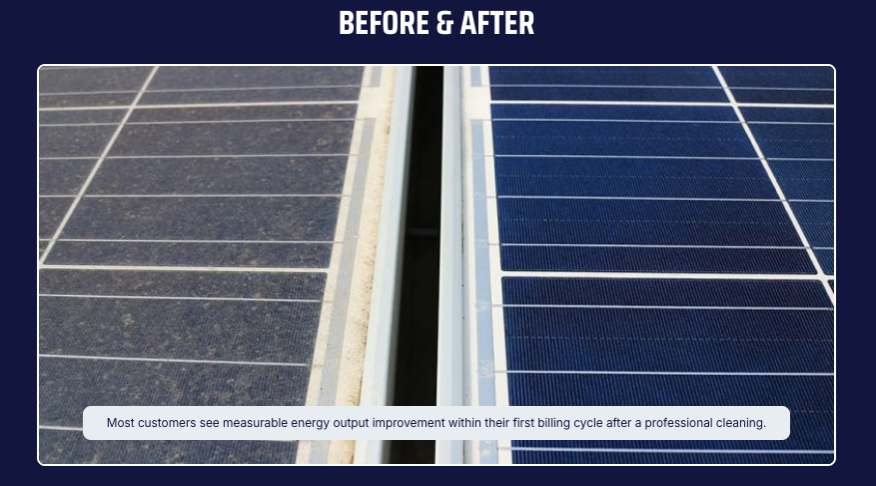
Solar panels sit outside year-round, collecting dust, pollen, and bird droppings just like every other exterior surface on your home. That layer builds up slowly enough that you don’t notice it happening, but it’s blocking sunlight from reaching the cells that generate your power.
Here’s how to tell if your panels need attention, and what to do about it.
Why Dirty Solar Panels Reduce Energy Production
Solar panels generate electricity by absorbing sunlight through photovoltaic cells sealed under a layer of glass. Anything sitting on that glass, including dust, pollen, sap, ash, and road grime, acts as a filter that blocks light before it reaches the cells.
The National Renewable Energy Laboratory estimates that soiling typically reduces solar panel output by about 5%, though losses can reach up to 25% in areas with long dry seasons, heavy dust, or high levels of airborne pollution from nearby roads or traffic. The panels themselves aren’t damaged. They’re just working through debris that shouldn’t be there, and output typically returns to normal once it’s removed.
A few things speed up buildup:
- Low rainfall: nothing washes the panels off between cleanings
- Nearby trees: pollen in spring, sap and leaf debris year-round
- Bird activity: droppings are acidic and can etch glass if left too long
- Construction or high-traffic roads nearby: added dust and particulate
- Low roof pitch: flatter panels hold onto debris that steeper panels shed naturally
How Often Should Solar Panels Be Cleaned?
Most homes benefit from solar panel cleaning once or twice a year. Homes in especially rainy climates may only need an annual cleaning, as rainfall can help remove some loose dust and debris. However, rain alone isn’t enough to fully clean solar panels. Pollen, bird droppings, sap, or other stubborn buildup often remain on the surface. sites, or busy roads, often benefit from cleaning twice a year or more.
If you’re not sure what’s right for your home, inspect your panels each spring and fall. If they appear dull, streaked, or have visible buildup, it’s time for a cleaning.
How Solar Panels Should Be Cleaned
A few details matter more than people expect:
- Water pressure: Never use a pressure washer on solar panels. High pressure can damage seals and the anti-reflective coating. To safely remove dirt without risking damage, use low-pressure water, such as a standard garden hose, or hire a professional who uses a soft-wash method.
- Water type: Hard tap water can leave mineral deposits behind as it dries, which may dull the glass over time. Many professional solar panel cleaning services use purified or deionized water to help prevent spotting.
- Tools: A soft-bristle brush or squeegee prevents the fine scratches a stiff brush or abrasive sponge can leave. Scratches reduce light transmission permanently, not just cosmetically.
- Timing: Early morning or evening. Cold water on sun-heated glass can cause thermal shock and stress the panel.
- Roof access: For most homeowners, safely reaching the panels is the biggest challenge. Panels are often on steep or high roof sections that aren’t safe to reach without the right equipment.
Before cleaning your panels yourself, check your manufacturer’s warranty. Many manufacturers specify approved cleaning methods, and using the wrong tools or excessive water pressure could damage the panels or affect your warranty coverage.
Should You Clean Solar Panels Yourself?
If your roof is low-pitch and easy to reach, a careful DIY cleaning with plain water and a soft brush can work. For most homeowners, though, the roof access and warranty risk outweigh the savings on a job you’re only doing once or twice a year. A professional cleaning also gets you a second set of eyes on the roof itself, catching loose flashing or gutter buildup while they’re already up there.
Our full solar panel cleaning services breakdown covers exactly how we handle it, including our soft-wash, deionized water process built to protect your warranty and get panels genuinely clean, not just rinsed.
Solar Panel Cleaning with Ned’s Window Cleaning
Solar panels are a long-term investment in lower energy bills. Every month your panels sit dirty is a month of lost output you’re not getting back. Ned’s Power Washing offers solar panel cleaning that’s safe for all panel types and manufacturer warranties. We have a 100% satisfaction guarantee, and if you’re not happy we will return and make it right. Our trained and fully insured technicians have been delivering 5-star customer experience to homeowners and business owners since 1965. Get your free quote today.