It happens every spring. The rain comes, and instead of rinsing your windows clean, it leaves them looking worse than before. Maybe there’s a hazy film. Maybe you see new streaks that weren’t there before.
Pollen is the reason why windows look dirtier after rain, and once you understand what’s happening, it’s easier to deal with it the right way.
Pollen isn’t just dust
Most people think of pollen the way they think of dust. It doesn’t just sit on the surface or rinse away easily.
Pollen grains have a waxy, sticky outer coating. That’s what helps them cling to plants, insects, and anything else it contacts. On glass, it doesn’t just rest on the surface. It sticks to it. A light breeze won’t move it. A quick rinse won’t either.
During peak pollen season (typically March through June), a fine layer of pollen builds up on your windows over the course of days. You’ll usually see it as a yellow-green coating. At this stage, it’s still relatively easy to remove with a proper cleaning, but not just a rinse.
What happens when rain hits pollen-coated glass
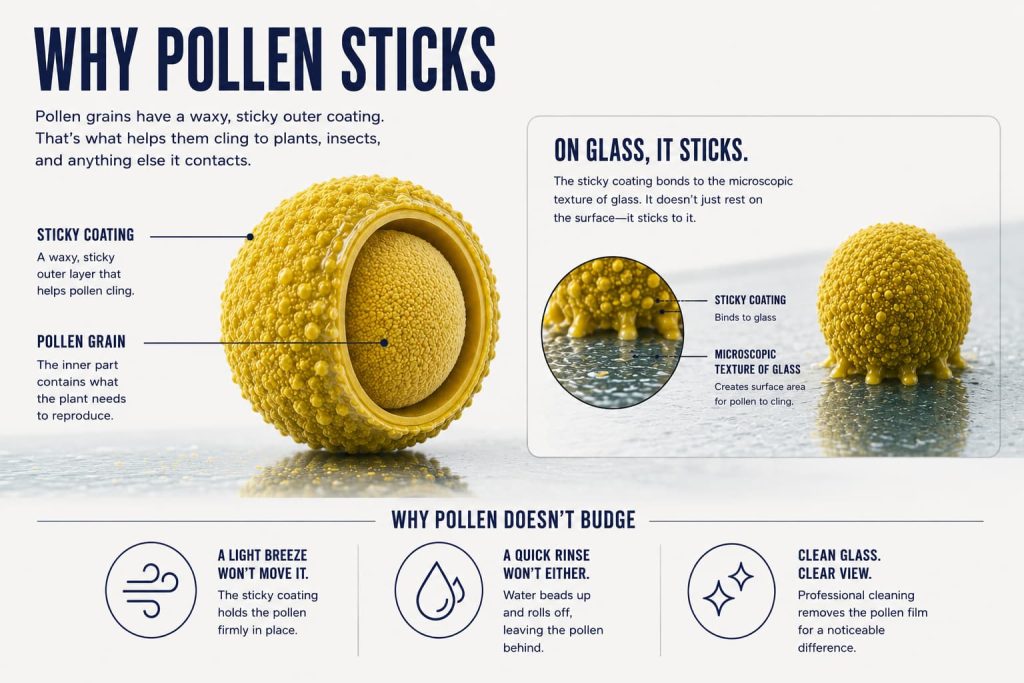 Here’s where expectations break down. Rain should help clean windows. For loose debris, it does, but pollen is different. Rain sets off a process that makes pollen removal harder, not easier.
When water hits dry pollen, it spreads it across the glass instead of washing it away. The grains mix with the water and form a thin layer across the surface. As the water evaporates, especially on sun-exposed windows, that layer dries in place. What was a dusty layer turns into a film that’s bonded to the glass.
This is why windows often look dirtier after rain during pollen season, not cleaner.
Why it gets harder over time
Spring is typically a rainy season. Pollen accumulates, it rains, it dries, then more pollen settles on top of the dried film.
Each cycle adds another layer. Over a few weeks, what started as a thin coating becomes a multi-layer buildup that standard rinsing can’t remove.
Sun exposure makes it worse. UV exposure and heat dry and harden the pollen on the surface. The longer a window goes without proper cleaning after pollen season peaks, the more effort it typically takes to remove the buildup.
What works and what doesn’t
A garden hose or quick rinse won’t do much against a dried pollen film. The pressure isn’t enough, and it spreads the residue more than it removes it.
Tap water also introduces minerals that leave a milky white residue on glass as it dries.
- Purified water (with zero TDS – total dissolved solids). Without minerals, it rinses clean and doesn’t leave behind residue.
- Agitation with a soft brush or cloth to loosen pollen film from the glass before rinsing.
- A method that removes residue instead of spreading it across the glass.
If you catch it early, DIY cleaning can work. Once there have been multiple rain cycles, most homeowners find it takes more time and effort than expected.
When is the best time to clean
The honest answer: it depends on how much buildup has accumulated.
A few practical considerations:
- Cleaning mid-pollen-season means the windows will collect more pollen shortly after.
- After several rain events, buildup is usually more set and harder to remove.
- South- and west-facing windows get more sun exposure and tend to accumulate more baked-on film than shaded windows.
- Overcast, mild conditions make cleaning more effective than hot, direct sun.
For many homeowners, the most efficient time is right after peak pollen season, when accumulation slows down.
When to bring in the professionals
Post-pollen window cleaning is one of the more common requests we get each spring. This is usually the point where homeowners notice rinsing isn’t working anymore.
Once the film has set across multiple cycles, removing it requires the right water and the right method. That’s where professional cleaning tends to produce better results.
Our team uses purified water with zero dissolved solids. It lifts residue from the glass and dries without leaving streaks or mineral haze behind.
If your windows have been through several weeks of pollen and rain, this is typically when homeowners schedule a cleaning.
Get your windows clean again
By mid-spring, most windows start to look hazy. It’s easy to assume it’ll wash away with the next storm. In most cases, it doesn’t.
The residue sits on the surface and builds with each cycle. By early summer, what started as a light layer usually takes a proper cleaning to fully remove.
The good news: it’s not damage. The glass underneath is fine. It just needs more than a rinse.
Late spring and summer are when many homeowners choose to clean, since pollen levels start to drop and results last longer. Once that film is on the glass, cleaning it off makes a visible difference regardless of timing.