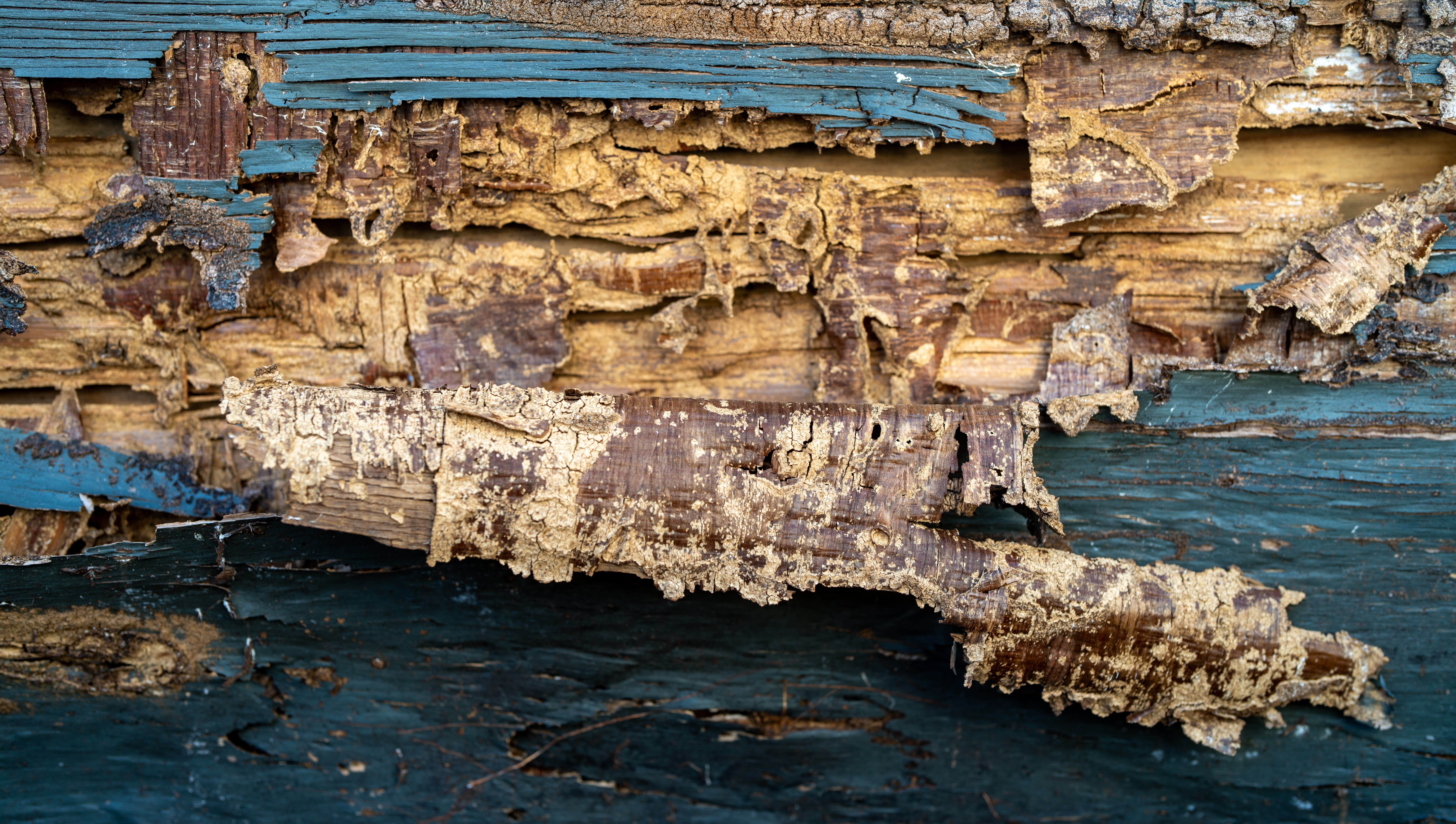
They’re both small, they both live in wood, and they can both cause serious damage to your home. But they’re not the same problem, and they don’t call for the same solution.
Here’s how to tell them apart, what each does, and what to do if you find either a carpenter ant or termite.
What carpenter ants and termites have in common
Both insects are drawn to wood, but for different reasons. Termites eat wood as their primary food source. Carpenter ants don’t eat it; they excavate it to build their nests. Both can cause significant structural damage if left untreated, and both tend to show up where there’s a moisture problem – wood that’s been water-damaged or is starting to rot.
Both also produce swarmers: winged reproductives that emerge in spring to start new colonies. If you spot winged insects around your windows or doors, that’s the first thing worth investigating
Carpenter ants vs termites – 5 ways to tell them apart
Up close, carpenter ants and termites look quite different. Here’s what to look for:
1. Body shape
-
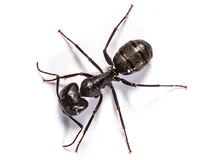
- Carpenter Ants – Three segments, narrow waist
-
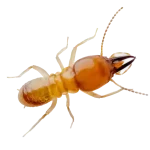
- Termites – Two segments, straight and uniform waist
- Termites – Two segments, straight and uniform waist
2. Antennae
-
- Carpenter Ants – Elbowed, bent at an angle
-
- Termites – Straight and beaded
3. Wings (on swarmers)
-
- Carpenter Ants – Uneven wings, with longer front wings
-
- Termites – Four wings of equal length
4. Color
-
- Carpenter Ants – Black, red, or a mix
-
- Termites – Light brown to off-white
- Termites – Light brown to off-white
5. What they leave behind
-
- Carpenter Ants – Sawdust or fine wood shavings (frass)
-
- Termites – Mud tubes or hollow-sounding wood, not sawdust
Which one causes more damage?
Termites cause more damage faster, and they’re often harder to detect because they work from the inside out. A termite colony can silently hollow out structural wood for years before you see any outward sign of an infestation. By some estimates, termites cause more than $5 billion in structural damage in the U.S. each year.
Carpenter ants work more slowly and don’t consume the wood, but they can still do real damage over time. They prefer wood that’s already soft or moisture-damaged, so their presence can also be a signal that you have a moisture issue worth investigating.
Neither one should be left alone to sort itself out.
What to do if you find either one
First, don’t panic, and don’t immediately reach for a can of store-bought spray. Both carpenter ants and termites typically require treatment that goes deeper than the surface. Over-the-counter products can scatter a colony without eliminating it, making the problem harder to treat later.
The most useful thing you can do right away is document what you’re seeing: take a photo, note where you found it, and check nearby areas for other signs like mud tubes, frass, or soft spots in wood. That information will help a pest professional assess the situation quickly.
A trained technician can identify the species, locate the colony, and recommend a targeted treatment, whether that’s a bait system, a perimeter spray, or something more involved depending on how established the infestation is.
At Ned’s Home, our pest professionals know what to look for and how to treat it, without guesswork. If you’ve spotted something that’s got you wondering, it’s worth a closer look. Book a pest inspection today and get a clear answer about what’s happening in and around your home.