May is when your lawn starts to take off. Grass is greening, temperatures are climbing, and everything looks like it’s heading in the right direction. But May is also when some of the most common lawn diseases start to take hold. The same warm days and cool nights that feel perfect on your porch create ideal conditions for fungal growth underground.
Brown patches, strange discoloration, or thinning spots are often the early signs of lawn disease, and May is the window when treatment makes the biggest difference.
Here’s what to look for and what to do about it.
Why May Is a Critical Month for Lawn Disease
Lawn diseases are caused by fungal pathogens that live in your soil year-round and become active under the right conditions. In late spring, when temperatures swing between warm afternoons and cool, damp nights, those pathogens wake up.
A few factors that make May particularly risky:
- Moisture: Spring rain and morning dew keep grass blades wet for extended periods, which is exactly what fungal spores need to germinate and spread.
- Temperature swings: Many common lawn fungi thrive when daytime highs are in the 70s and nighttime lows dip into the 50s.
- New growth vulnerability: Young spring grass growth is more susceptible to disease than established, hardened turf.
The good news? Fungal diseases are highly treatable when caught early. May gives you a real opportunity to get ahead of the problem before it spreads through the full growing season.
Common Lawn Diseases to Watch for in May
1. Brown Patch
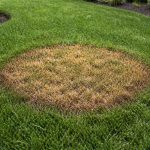
Brown patch is one of the most recognizable lawn diseases. It shows up as circular patches of brownish-yellow grass that can expand quickly in warm, humid weather. The patches often have a darker border, sometimes described as a “smoke ring,” which distinguishes them from drought stress or other issues.
It’s most common in tall fescue and ryegrass lawns and tends to appear during periods of high humidity and overnight temperatures above 60°F. Once conditions are right, it can spread fast, so early identification is key.
2. Dollar Spot
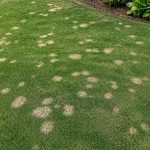 Dollar spot starts small. It appears as silver-dollar-sized circles of bleached-looking grass. Left untreated, those small spots merge into larger, irregular patches that can cover significant areas of your lawn.
It tends to affect undernourished lawns and shows up when grass is wet in the morning and dry in the afternoon. If you see a white cobweb-like coating on your grass early in the morning, dollar spot is a likely culprit.
3. Red Thread
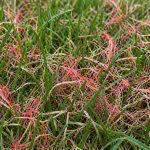 Red thread appears as pinkish or reddish threads on the tips of grass blades, sometimes accompanied by pink cotton-like growth at the base. It’s most common in lawns that are low on nitrogen, and while it rarely kills grass outright, it leaves your lawn looking ragged and patchy.
Cool, wet conditions in May are prime territory for red thread, particularly in fine fescues and perennial ryegrass.
4. Rust Disease
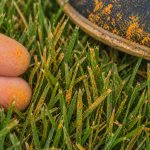 Rust is easy to spot if you know what you’re looking for. It coats grass blades with an orange or yellowish powder, and if you walk through an affected area, you may notice that powdery residue on your shoes. It can significantly weaken turf over time, making your lawn more vulnerable to drought, foot traffic, and other stressors.
Rust tends to appear during slow grass growth periods. It’s most common in late summer or early fall, however it can begin to appear in late spring if temperatures fluctuate or moisture is inconsistent.
5. Snow Mold
Snow mold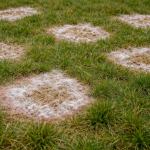 appears as grayish or pinkish circular patches that show up as snow melts in late winter and early spring. While it develops under snow cover, the damage becomes visible in May and can persist if untreated.
Mild cases can sometimes recover on their own as the lawn dries out. More severe cases, especially those with the pinkish variety, may require fungicide treatment and overseeding.
How to Tell If You Have a Lawn Disease (vs. Something Else)
Not every brown patch is a disease. Before you assume fungus, rule out a few other common causes:
- Drought stress tends to produce uniform browning across the whole lawn, not irregular patches.
- Grub damage causes sections of turf to feel spongy or pull up easily, almost like a piece of loose carpet. Grub control is included as part of our lawn care service plans.
- Dog spots are caused by high levels of urea and nitrogen in dog urine and typically small, round, and in predictable locations near the edges of the yard.
Lawn disease tends to produce distinctive patterns, and often there are visual clues on the grass blades themselves, such as discoloration, lesions, or coatings. If you’re not sure what you’re looking at, that’s exactly the situation where a professional lawn evaluation pays off.
What to Do If You Spot a Problem
If you’re seeing the early signs of lawn disease in May, here’s what to do:
- Don’t wait. Fungal diseases spread. What starts as one small patch can turn into a significant portion of your lawn within a few weeks if conditions stay favorable.
- Adjust your watering habits. Water in the early morning so grass has time to dry before nightfall. Wet grass overnight accelerates fungal growth.
- Avoid over-fertilizing. Excess nitrogen in warm, humid conditions can increase susceptibility to certain diseases like brown patch. If you’re not sure what your lawn needs, hold off until you have a diagnosis.
- Call a professional. Effective lawn disease control starts with proper identification. Different pathogens require different treatments, and applying the wrong product can waste time and money.
Lawn Disease Treatment: What It Looks Like with Ned’s Home
May doesn’t last long, and neither does the treatment window for spring lawn diseases. A healthy summer lawn starts with catching problems in May. If something looks off, getting it identified early can prevent more widespread damage as temperatures rise.
If you’re seeing signs of disease and aren’t sure what you’re dealing with, that’s where we come in. Ned’s Lawn Treatment specialists will assess your lawn, identify the specific pathogen, and apply a targeted treatment plan to stop it in its tracks. Learn more about our lawn disease control service or get a free quote to get started.